Influencer Strategy for Implementing GoGuardian along with Stronger Broadband at Hillcrest
Part A – Foundation of the Strategy
Results to Achieve & How to Measure Them
My goal is to create a school environment where teachers confidently integrate technology into instruction without the constant fear of distractions or Wi-Fi failures. This means more than just asking teachers to use new tools, it means making sure they have the confidence, resources, and support they need to succeed. Both GoGuardian and stronger broadband must work hand in hand to create the right conditions. As Covey, McChesney, and Huling (2012) emphasize in The 4 Disciplines of Execution, success requires focus on a few wildly important goals. For Hillcrest, these goals are clear: prioritizing teacher adoption of GoGuardian, ensuring stable broadband access, and building teacher confidence. Success will be measured by four indicators:
1. Increased teacher adoption of GoGuardian (tracked through login and usage reports).
2. Reliable broadband performance across all classrooms, measured by tech reports and fewer connectivity complaints.
3. Teacher confidence surveys that show reduced anxiety about using digital tools.
4. Student engagement evidence, including fewer off-task incidents and stronger participation in blended lessons.
Additionally, we will evaluate the consistency of Wi-Fi access across classrooms and gather informal feedback from teachers during PLC meetings. By combining both quantitative data (usage reports, surveys, connectivity logs) and qualitative data (teacher reflections and student feedback), we can build a clear picture of whether this initiative is creating meaningful change.
Vital Behaviors
The core behaviors I want to encourage are for teachers to actively use GoGuardian during instruction and for them to trust that stronger broadband will keep their lessons running smoothly. This means logging in consistently, using features like screen monitoring and site redirection, and experimenting with activities that blend online and face-to-face learning. Alongside this, teachers should feel safe experimenting with blended learning strategies that rely on stable broadband access. Another vital behavior is teacher collaboration, sharing ideas, troubleshooting problems, and supporting peers who are less confident with technology. For example, in my 10th grade history class, I used GoGuardian during a primary-source analysis lesson. I worried students might drift off task, but being able to guide them back instantly kept the discussion sharp and focused. When these behaviors take root, the culture shifts from hesitation to confidence, which directly benefits student engagement.
Organizational Influencers
Key influencers at Hillcrest include:
- Teacher leaders who are respected by peers and willing to model classroom use of GoGuardian.
- Technology staff who ensure connectivity and provide responsive troubleshooting.
- Administrators who can set expectations while also encouraging risk-taking through support and recognition.
As Patterson and Grenny (2013) explain in Influencer, lasting results come when trusted influencers model vital behaviors consistently. At Hillcrest, teacher leaders and early adopters can play this role by demonstrating GoGuardian use and showing how reliable broadband makes technology a safe partner in instruction. Beyond these formal roles, informal influencers matter too. Sometimes the quiet teacher who finds success with a new tool inspires more change than a formal presentation. Recognizing these individuals and giving them opportunities to share their experiences will help spread adoption naturally. By aligning influencers at all levels, administrators, tech staff, teacher leaders, and informal champions. We can build momentum that sustains itself.
Part B – Six Sources of Influence
Cohesive Strategy
This influencer strategy is about more than software or connectivity. It’s about creating a culture of trust and experimentation where teachers feel empowered to take risks. By combining servant leadership with a growth mindset, I want to walk alongside colleagues rather than mandate change. As Patterson and Grenny (2013) remind us, influence grows when we target a few vital behaviors and reinforce them from multiple angles. Likewise, Covey, McChesney, and Huling (2012) highlight that sustainable change comes when schools apply the disciplines of focus, leverage, engagement, and accountability. When teachers see GoGuardian and stronger broadband as partners instead of burdens and when they know the internet won’t drop in the middle of class they are free to focus on what matters most: student learning.
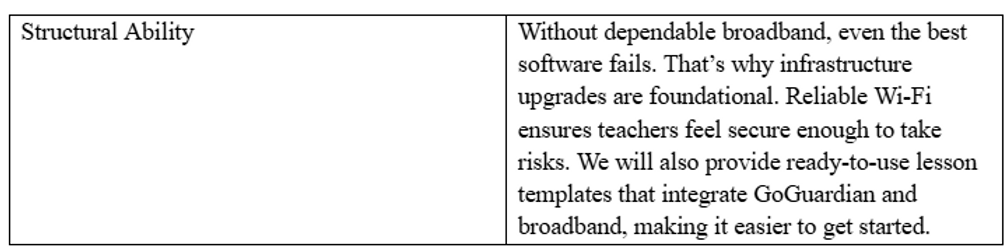
Ultimately, this plan positions GoGuardian and strong broadband not as ends in themselves, but as tools that support teachers and students. The six sources of influence provide a roadmap for shifting behavior, building confidence, and embedding digital tools into everyday practice. By fostering personal motivation, providing training, celebrating social proof, and ensuring strong infrastructure, Hillcrest can make technology integration a sustainable reality.
References
Grenny, J., Patterson, K., Maxfield, D., McMillan, R., & Switzler, A. (2013). 10x your influence:
Research report. VitalSmarts.
Patterson, K., & Grenny, J. (2013). Influencer: The new science of leading change (2nd ed.).
McGraw-Hill Education.
Covey, S., McChesney, C., & Huling, J. (2012). The 4 disciplines of execution: Achieving your
wildly important goals. Free Press/Simon & Schuster.